






Despite the news that fuel import spending has fallen by 54 percent in two years, Nigerians should demand clear proof that these savings are improving everyday life.
Development Diaries reports that data from the Central Bank of Nigeria’s (CBN) Balance of Payments report shows the amount spent on the importation of refined petroleum products has dropped sharply by 54 percent in two years.
Fuel imports are down by 54 percent in two years, and that is real progress. Nigeria spent $14.58 billion on fuel imports in the first nine months of 2023, $11.38 billion in the same period of 2024, and just $6.71 billion in 2025, according to CBN data.
That means almost eight billion dollars in foreign exchange savings compared to two years ago. This drop shows that subsidy removal, tighter foreign exchange controls, and increased local refining, especially from the Dangote Refinery, are beginning to reduce Nigeria’s long-standing dependence on imported fuel.
But numbers alone do not put fuel in cars or food on tables, so Nigerians must now ask hard questions about what this progress really means for daily life.
First, let us demand to know where the savings went. If fuel imports are no longer draining dollars at the same level, the government should clearly show how this FX relief is being used.
Are transport costs coming down? Is inflation easing? Are health, education, power, or social services getting more funding? Savings that disappear into silence help nobody.
Second, we must stop accepting headlines while pump prices remain painful. Reduced imports mean little if petrol prices keep jumping without explanation.
We should demand transparent pricing templates that show how local refining affects pump prices. If fuel is refined here, transport and insurance costs should reduce, so why does pricing still feel like we are importing everything by air freight?
This also raises the big question of import-parity pricing. If Nigeria refines more locally, regulators must explain why local prices are still tied to global risks that Nigerians are supposedly escaping.
Third, we must demand strong regulation, not refinery worship. As local refining grows, especially with one dominant player, regulators must protect competition.
No refinery should control supply, prices, or access to the market. We should demand firm anti-monopoly oversight to prevent price fixing, supply gatekeeping, or quiet deals that shift power from importers to refiners without protecting consumers. Progress should not replace one problem with another.
Energy reform cannot be measured only in statistics; it must be backed by transparency, accountability, and protection for ordinary citizens.
To achieve this, we must now insist that the Ministry of Petroleum Resources, Nigerian Midstream and Downstream Petroleum Regulatory Authority (NMDPRA), the CBN, and relevant agencies publish refinery utilisation and supply data, releasing verifiable information on output, downtime, and domestic allocation, and end secrecy in downstream regulation.
We must also demand monthly publication of import volumes, foreign exchange allocations, and domestic supply figures; protect consumers from ‘reform fatigue’ by implementing measures against profiteering, price shocks, and arbitrary adjustments, use FX relief to stabilise the naira with measurable outcomes, invest savings in energy infrastructure, including pipelines, storage, distribution, and power generation, not elite comfort.
Lastly, we must demand that the government prioritise precision over propaganda, committing to credible, measurable milestones towards reduced dependence rather than exaggerated claims of import elimination.
The bottom line is that the government must publish simple, clear accounts that connect reduced fuel imports to real benefits for ordinary people.
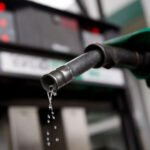
Photo source: NNPC Group