





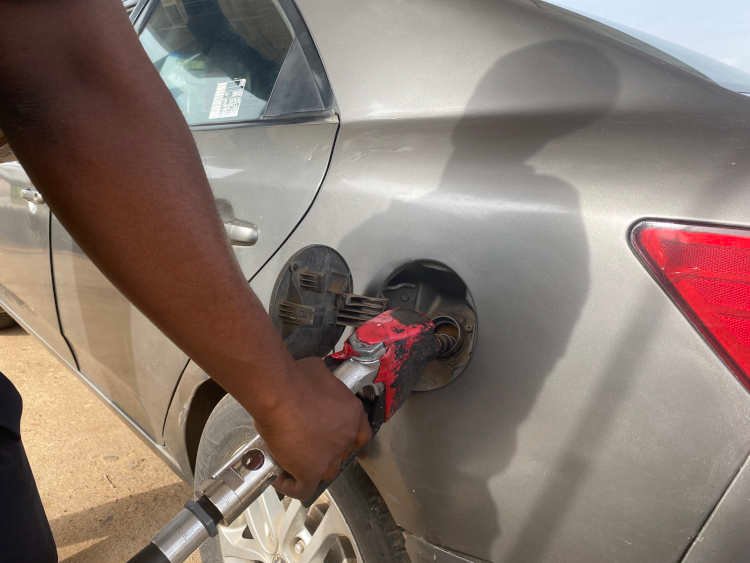
From Ghana to Kenya and Sudan, the same global fuel crisis meant some citizens got relief, others paid more at the pump and lost their livelihoods, while many were left facing violence and insecurity.
Development Diaries reports that the fuel crisis triggered by the Middle East conflict and the Strait of Hormuz disruption hit African countries roughly simultaneously.
In Ghana, the government of John Mahama looked at rising fuel prices and decided that citizens should not carry the full weight of a problem they did not create.
So taxes and distributor charges were adjusted to cushion the impact, a signal that someone in government understood that when global shocks happen, ordinary people should not be left alone to figure it out.
Over in Tanzania, lawmakers were also paying attention, with members of parliament pushing for fuel tax relief, reflecting a simple logic that sounds almost revolutionary in some places, that when the cost of living rises because of forces beyond citizens’ control, the state has a duty to step in.
Then you arrive in Kenya, where the story takes a different turn, as instead of cushioning the shock, fuel was being imported under questionable conditions, at higher prices, and outside established systems, with citizens paying more at the pump, while farmers missed planting seasons because tractors do not run on explanations.
And then there is Sudan, where the conversation moves beyond fuel and into human rights issues, with Human Rights Watch documenting arbitrary detention and abuse by armed forces against civilians.
At that point, you are no longer talking about economic policy but a state that has stopped pretending to protect its people.
It might be tempting to treat these as separate stories, one about fuel, another about corruption, and another about conflict but they are connected by a single thread revealing a spectrum of how governments relate to citizens.
On one end, you have states trying, however imperfectly, to absorb shocks. In the middle, you have systems where crises become opportunities for extraction. And at the extreme, you have situations where the state itself becomes the source of harm.
The uncomfortable truth is that none of this is accidental because these outcomes are shaped by choices, by institutions that either work or do not, and by whether leaders see citizens as people to protect or problems to manage.
Africa continues to feel the impact of global fuel disruptions so strongly because many countries still depend on imported refined petroleum, despite producing crude oil. It is like owning a farm and still buying food from your neighbour at a higher price.
And as always, the burden does not fall equally, as women running small businesses, farmers trying to plant, and families managing household budgets are the ones who feel the shock first and recover last.
So citizens in countries like Ghana and Tanzania must pay attention to whether promised relief actually reflects in pump prices, because policy announcements do not always survive the journey to implementation.
In Kenya, citizens and civil society groups must continue to demand accountability, not just for what happened, but for how systems allowed it to happen.
At the continental level, institutions like the African Union cannot afford to treat these issues as isolated incidents. Whether it is responding to human rights violations or addressing economic vulnerabilities, the response must match the scale of the problem.