






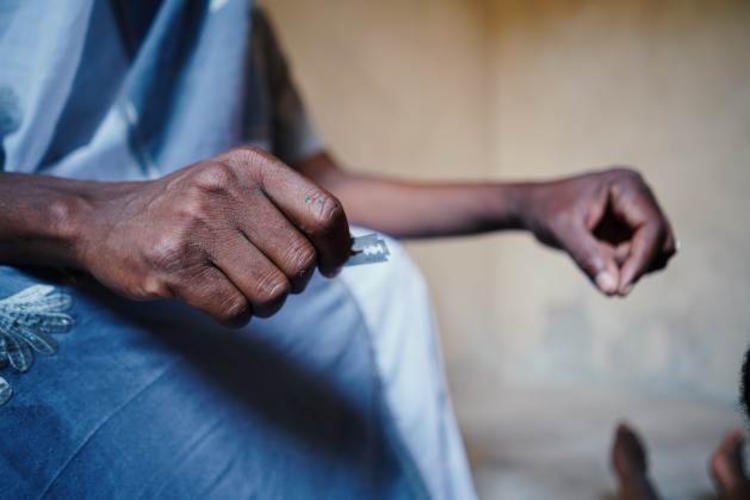
The continued cutting of girls and the abandonment of survivors despite a legal ban on female genital mutilation (FGM) in Kenya is a disturbing indictment of state failure.
Development Diaries reports that survivors and activists from the East African country have recently emphasised that banning FGM is not enough to ensure justice for women and girls.
Kenya has banned FGM, yet survivors and activists are pointing out the obvious problem, which is that the system often stops at prohibition and forgets everything that should come after.
It is understood that protection is weak, prosecutions are rare, support is patchy, and recovery is left to non-governmental organisations.
Survivors’ accounts have made it clear that criminalisation alone has not ended the practice; instead, it has pushed the harm into quieter spaces where girls are cut under pressure, silence, and fear, and where the state often arrives too late or not at all.
Many survivors have recounted being cut as children without consent, often by relatives, and living with lifelong physical pain, trauma, and shame.
Many of them struggle with complications during sex, pregnancy, and childbirth, while others carry deep psychological scars that shape their relationships and self-worth for decades.
These experiences show that FGM is not a one-time event but a permanent injury, and when survivors cannot access counselling, health care, or protection, the harm simply continues in another form.
The justice system is one major point of failure, as reporting FGM is risky, evidence is hard to gather, and survivors fear backlash from family and community members who may protect the perpetrators.
Another issue is that of health and psychosocial support, with survivors needing long-term care, including trauma counselling, sexual and reproductive health services, and support during pregnancy and childbirth.
Kenyans should demand survivor support maps from counties, push men to publicly reject FGM as a marriage condition, track justice outcomes instead of headlines, and support survivor-led spaces.
Relevant government institutions must move from statements to systems. The governments in Kenya must fund a minimum survivor care package, with the Ministry of Gender, Ministry of Health, and Ministry of Labour and Social Protection standardising trauma-informed health and psychosocial care.
The National Police Service, Office of the Director of Public Prosecutions (ODPP), and the Judiciary must publish clear, survivor-safe reporting and prosecution pathways, and oversight bodies such as the parliament, county assemblies, and the Kenya National Commission on Human Rights (KNCHR) must release regular public scorecards showing what is working, what is failing, and who is accountable.
A ban may draw the line, but justice is what builds the bridge, and until Kenya builds that bridge, FGM will keep walking around the law like it was never invited to obey it.
Photo source: Inter Press Service