






The shutdown of official activities at the Federal Capital Territory (FCT) as a result of the strike by the Joint Union Action Committee (JUAC) reveals weak public administration in Nigeria’s capital.
Development Diaries reports that the union has been on strike for over one week over non-payment of five-month wage awards and 14 other demands.
Several agencies, including the Abuja Geographic Information Systems (AGIS), the Abuja Environmental Protection Board (AEPB), the FCT Water Board, among others, have been shut down.
It is also understood that the Nigeria Union of Teachers (NUT) and the Nigeria Union of Local Government Employees (NULGE) have joined the strike in solidarity with their counterparts at the FCTA and the FCDA.
This development is about how weak public administration, budget execution failures, and labour rights violations are collapsing essential services in Nigeria’s capital.
When schools, water agencies, sanitation services, and land offices all stop working at the same time, it shows that the system meant to keep the city running is broken.
Workers say five months of wage awards have not been paid, with promotion arrears remaining unpaid, and statutory deductions for pensions and the National Housing Fund allegedly not remitted.
These are not new demands or unclear rules, as public service regulations already cover wages, promotions, and pensions. The problem is that these rules are not being obeyed.
Instead of resolving these issues through dialogue and structured negotiation, the response has leaned towards court action and coercion, an approach that has not worked in the past and is not working now.
Allegations of illegal tenure extensions and disputed promotion exercises affecting thousands of workers further weaken trust in the system, and when leadership ignores due process, workers lose confidence and service delivery collapses.
The shutdown of schools and public services also raises serious rights concerns, with children across all six area councils losing their right to education each day schools remain closed.
As for communities, they are cut off from water, sanitation, and primary health care services. Workers’ labour and pension rights are affected when deductions are not remitted, which is unlawful.
It is important to note that the impact is not equal, as women are forced to stay home when schools close, increasing unpaid care work, while girls in low-income households face a higher risk of dropping out when learning is repeatedly disrupted. Also, rural residents in the area councils lose access to healthcare and water first.
Persons with disabilities are not left out, as they suffer more when public services stop. So, what is happening in the FCT deepens inequality in a city already divided between well-serviced elites and neglected communities.
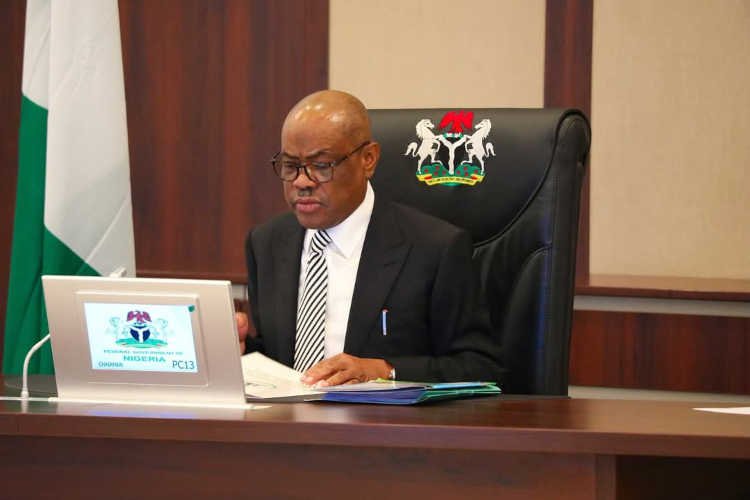
As citizens, we should demand that the FCTA, under Minister Nyesom Wike, publish a clear, dated plan for settling wage awards, arrears, and pension remittances.
Area councils should account for how many school days have been lost and explain how children’s learning will be protected. For their part, parents and community groups should document school and health facility closures.
Federal authorities must treat repeated shutdowns in the FCT as a national warning sign because this development is about a government failing to keep basic promises, and until that changes, the capital will remain vulnerable to collapse.
Photo source: Gov Wike/X