





The senate’s refusal to mandate electronic transmission of polling-unit results is a direct blow to the ordinary Nigerian voter who simply wants an election that cannot be quietly rewritten.
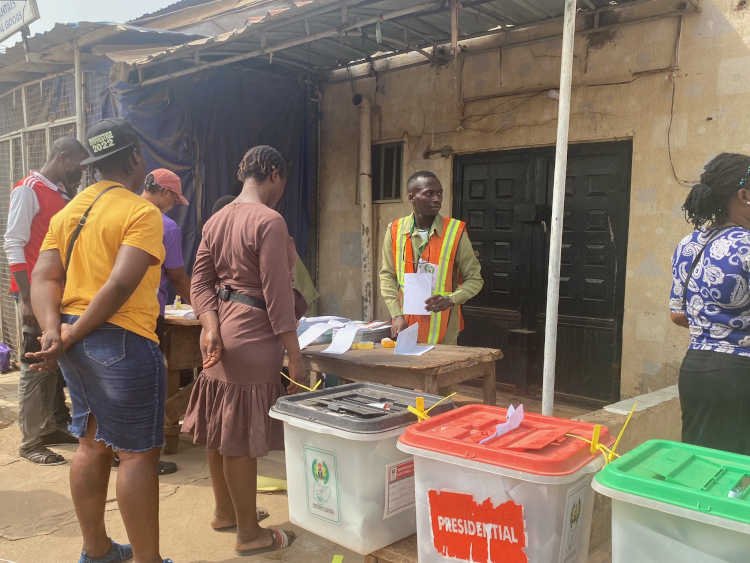
Development Diaries reports that the Nigerian senate on Wednesday rejected the proposal to make the electronic transmission of election results from polling units to the Independent National Electoral Commission’s (INEC) Result Viewing Portal (IREV) mandatory after vote counting.
The red chamber rejected the proposal as it passed a bill to amend Nigeria’s Electoral Act to strengthen the country’s electoral system and align it with current realities.
But the leadership of the senate has insisted that they ‘did not reject electronic transmission’, only the amendment. That argument is precisely the red flag, as the amendment was the clarity that citizens have been demanding because the ambiguity in the current law is exactly where election magicians perform their best tricks.
The system failing here is Nigeria’s election integrity architecture, because the problem is not a lack of technology, but rather the political class’s steady habit of designing rules that reduce visibility, widen loopholes, and concentrate discretion in places where the public cannot monitor.
When reforms begin to threaten powerful interests, powerful people rewrite the reforms; and the senate’s latest move fits that pattern perfectly.
Striking out real-time uploads and sticking with a vague ‘transfer’ clause gives INEC, and anyone leaning on INEC, enormous room to delay, reinterpret, or reroute result flows.
If real-time upload is not good enough, Nigerians deserve to see the senate’s superior alternative. Where is the safeguard that is stronger than what citizens demanded?
Then there is INEC’s planning window, which the senate cut from 360 days to 180 days. Elections run on logistics, not prayers. You need time for procurement, training, voter education, and troubleshooting.
When that time shrinks, the likelihood of rushed deployment and avoidable failure increases. And when failure happens, it becomes the excuse for improvisation, the kind that mysteriously benefits politicians more than voters.
The senate also tightened candidate nomination deadlines, forcing parties to conclude internal processes 90 days before election. In a country where party primaries are already chaotic and opaque, compressing the timeline simply means more litigation, more substitutions, more backdoor deals.
This is why the senate leadership, majority caucus, and committee drivers carry direct responsibility. Yet the real battleground now shifts to the conference committee. That is the small group of lawmakers who will harmonise differences between the senate and House of Representatives versions.
The House of Representatives passed a version that included electronic transmission; the senate did not. Therefore, the harmonisation table has become an integrity test for the entire National Assembly.
Nigeria does not need an Electoral Act that makes elections easier to manipulate. It needs one that makes manipulation a logistical nightmare.
So, as this process continues behind closed doors, Nigerians must ask the right questions. What exactly will be uploaded to iReV, and when? What problem does the 180-day notice actually solve? Who requested these rollbacks? Why should citizens trust a reform exercise that is being conducted like a private negotiation?
Without public pressure, the harmonisation stage will deliver a law that looks harmless but rewrites the future.
Public institutions also have a duty here. The National Assembly must publish committee schedules and decisions. INEC must clearly state what minimum legal protections it needs to run credible elections.