





The deplorable state of the Ado–Ijan–Iluomoba–Ikare Road in Ekiti and Ondo states reflects a deeper problem of a trust deficit between the government and its citizens.
Development Diaries reports that residents and transporters are groaning over the deplorable state of the highway, which connects Ekiti and Ondo states to Abuja, the northern parts of the country, and the southwest.
It is understood that the road has been in a terrible state for years, according to a report by Punch.
Despite repeated promises by federal officials and political leaders, the road remains largely impassable, causing untold hardship for commuters and damaging the reputation of the government as a reliable service provider.
According to the report, the Senate Leader, Senator Opeyemi Bamidele, representing Ekiti Central, in 2024, disclosed that President Bola Tinubu had approved the reconstruction of the road.
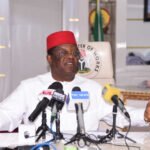
Following that assurance, the Minister of Works, Dave Umahi, in March 2024, promised that work would be expedited to deliver critical roads in Ekiti.
Sadly, 18 months down the line, nothing has changed.
When government leaders announce road contracts and approvals but citizens continue to face the same problems months or even years later, confidence in public institutions erodes.
This is particularly concerning in a country where, according to a 2022 report by Afrobarometer, only about 30 percent of Nigerians say they trust the government and key institutions ‘most of the time’ or ‘always’.
The road’s importance cannot be overstated. It connects two states, serves as a gateway to Abuja and the southwest, and links major institutions such as Afe Babalola University, Ado Ekiti (ABUAD), the Federal Polytechnic Ado Ekiti, and the state’s cargo airport.
Yet, its neglect has led to a situation where businesses, schools, and residents are forced to deal with economic losses, delays, and increased risks to life and property.
Transporters report daily damage to vehicles, while educational institutions like ABUAD stress that the road’s poor condition reduces their ability to attract both local and international patronage.
For a state like Ekiti, still struggling to position itself as an investment hub, this neglect undermines growth.
The recurring government assurances have, unfortunately, done little to ease public frustration.
From Senator Bamidele’s announcement of presidential approval to Minister Umahi’s promise of expedited work, and most recently Governor Biodun Oyebanji’s reassurances, the story has remained the same: promises without visible progress.
This creates a cycle where government statements are increasingly dismissed as political rhetoric, deepening the trust gap.
In fact, Nigeria’s infrastructure deficit is already staggering, estimated by the African Development Bank (AfDB) at over $100 billion, and visible failures like this only reinforce public scepticism about whether leaders are serious about closing that gap.
Development Diaries calls on the minister of works to issue a clear, transparent timeline for the rehabilitation of the road, with regular updates on progress. Anything short of immediate, visible action will only widen the trust deficit.