
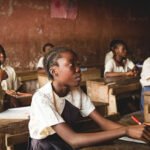





The United Nations International Children’s Emergency Fund (UNICEF) has categorised Egypt as ‘extremely high risk’ with regard to the impact of climate change on children.
The UN agency, in its latest Children’s Climate Risk Index (CCRI) in the Middle East and North Africa, called for urgent action to protect children and young people.
According to the report, Egypt had an index score of 7.3 (out of ten), the highest in the region.
It is understood that Egypt is highly exposed to climate and environmental shocks, with 5.3 million children estimated to be exposed to heatwave.
Also, the country’s average temperature has increased by 0.53 degree Celsius per decade over the past 30 years.
‘Urgent action is needed to protect children and young people by adapting critical social services to climate change, prepare them with climate education and ensuring that voices are heard and acted on, and prioritizing them in climate funding, policies and resource allocations’, UNICEF said in a statement.
Egypt is particularly vulnerable to the impacts of climate change with respect to water security, agriculture and livestock, energy demand and supply.
The North African country has only one main source of water supply, the River Nile, which supplies over 95 percent of the water needs of the country.
Data from the United Nations Development Programme (UNDP) shows that the Nile delta is seriously threatened by sea level rise.
Egypt pioneered the first sovereign green bond in North Africa worth U.S.$750 million, World Bank data shows. Its first impact report shows 46 percent of proceeds earmarked for clean transport and 54 percent for sustainable water supplies and wastewater management.
Also, the country, in 2021, launched a new National Climate Change Strategy (NCCS) for 2050.
Photo source: UNICEF

