






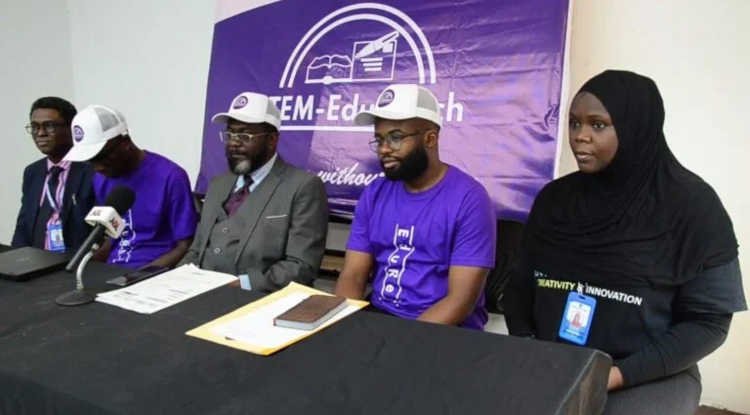
A non-governmental organisation (NGO), StemChild Care Academy, has launched an online learning platform, ‘EduReach’, and awarded two-year scholarships to students rescued from kidnapping incidents in Kebbi and Niger States.
Development Diaries reports that this move is part of efforts to aid the recovery and reintegration of the students into formal schooling.
At a briefing to unveil the platform, the organisation’s Chief Executive Officer, Alhaji Mamu, said the initiative was created to guarantee that every child, regardless of background or experience can access quality learning opportunities.
He explained that EduReach is designed to close learning gaps for primary and secondary school pupils, offering both Nigerian and Cambridge curricula with a strong focus on STEM subjects such as robotics, coding, and artificial intelligence.
The initiative comes at a time when Nigeria’s education sector faces mounting challenges, with insecurity, mass abductions of schoolchildren, harmful cultural practices, and widespread poverty pushing millions of children out of the classroom.
Frequent school attacks in the North have weakened community trust in formal education, while chronic underfunding and outdated systems continue to widen learning gaps nationwide.
The platform features pre-recorded lessons delivered by trained teachers, alongside lesson notes, quizzes, assignments, live discussion forums, and personalised learning paths.
Mamu noted that letters had been sent to the affected state governments, offering the scholarships as a contribution to the children’s rehabilitation, and urged wider collaboration to tackle barriers that have long undermined education outcomes.
He stressed that no child should be denied safe and equitable learning, pointing out that insecurity, early marriage, teenage pregnancy, and poverty continue to threaten the school system.
Citing the country’s severe teacher shortage – 350,000 teachers for 46 million learners, a ratio of about 130:1 against the global standard of 20:1, he warned that persistent structural gaps are worsening an already strained system.
The organisation’s Chief Software Engineer, Fidelis Agoundjekpo, highlighted the platform’s low-data design, which enables students to access videos, quizzes, assignments, and teacher engagement even with limited internet resources.
He explained that Year One pupils can view video lessons with about 200MB of data, while senior classes require up to one gigabyte to complete a full course, making the app affordable and accessible for many households.
He called on parents, educators, government, and development partners to support widespread access to the platform to help students strengthen their learning, particularly in STEM fields.
Source: NAN
Photo source: NAN