






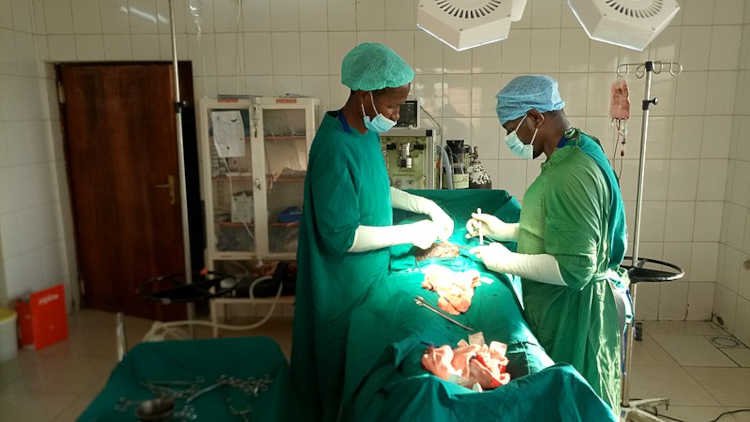
The Nigerian Medical Association’s (NMA) renewed outcry over the government’s failure to honour its agreements casts serious doubt on the government’s commitment to safeguarding the welfare of its citizens.
Development Diaries reports that the NMA, in a statement, argued that the government’s ‘insensitivity’ towards the welfare of Nigerian doctors is aiding avoidable brain drain in the country.
The government’s response, as always, comes wrapped in fine speeches and fresh promises. Yet, promises do not stop a doctor from clocking 36 straight hours because the hospital staff list is shorter than the queue in the emergency ward.
Promises do not stop young doctors from dusting off their passports and heading for Heathrow or Toronto, where the Hippocratic oath comes with decent pay, working equipment, and actual respect. If Nigeria could sign health agreements as quickly as it signs loan papers, perhaps doctors would finally stop packing their bags to leave the country.
What makes this moment particularly painful is the contradiction at its core. The Nigerian constitution obligates government to protect the welfare of the people, yet year after year, health workers remain at the mercy of neglect.
For millions of vulnerable Nigerians, including children in need of immunisation, women battling childbirth complications, and the elderly struggling with diabetes or hypertension, this neglect is life and death.
Governments, past and present, have promised hazard allowances, upgraded facilities, and improved conditions. But the reality remains that doctors are overworked, underpaid, and undersupplied.
It is no wonder that ‘japa’ has become the national anthem of the medical profession, with each departure deepening the crisis, leaving behind a thinning workforce that must serve more people with fewer resources.
Patients wait hours to see a doctor who is already juggling 10,000 others, while politicians book flights to Europe for ‘medical tourism’ as if it were part of their job description.
This erosion of trust is dangerous because when the government pledges welfare reforms but delivers neglect, citizens are left with poor health services and deeper disillusionment.
Development Diaries calls on the Minister of Health and Social Welfare, Professor Ali Pate, to step beyond press briefings and match words with action. Commitments must translate into concrete improvements with respect to fair pay, proper equipment, reliable infrastructure, and genuine investment in the health sector.
Only then can Nigeria slow the exodus of medical professionals and rebuild confidence in its healthcare system.
Photo source: Own work