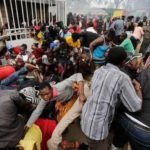






The alarming escalation of sexual violence in the Democratic Republic of the Congo (DRC) amid ongoing conflict has created a grave humanitarian emergency, with women and girls bearing the brunt of the crisis.
Development Diaries reports that the conflict in the DRC has precipitated a humanitarian crisis marked by a sharp increase in rape and sexual violence against women and girls.
It is understood that earlier this year, in the latest outbreak of violence, nearly 500 cases of sexual violence were reported in a single week, with over 150 involving children.
This is not only shocking but also indicative of a deeply entrenched pattern of using rape as a tool of war.
According to a press statement by CARE, despite compounded factors such as insecurity and fear of reprisals, the women and girls who manage to reach health facilities after sexual violence face another challenge, as post-exposure prophylaxis (PEP) kits are now not available.
The collapse of the procurement chain for PEP kits due to funding cuts has compounded the trauma survivors endure, effectively denying them life-saving treatment and amplifying their vulnerability.
This is a tragic failure of humanitarian protection and healthcare systems in a context where survivors already face significant risks just to access basic services.
CARE’s Country Director in DRC, Amadou Bocoum, aptly describes this situation as both a human rights violation and a calculated war strategy.
‘The systematic use of rape as a weapon of war is not only a violation of human rights but a deliberate strategy to destabilize communities’, he said, underscoring the severity of the crisis.
Survivors not only grapple with the brutal physical and emotional toll of the violence but must now also contend with the dangerous consequences of being denied immediate medical care, such as protection from HIV and other infections.
The absence of PEP kits at health facilities reflects a glaring gap in humanitarian response, exposing the fragility of aid systems under strain from dwindling financial support.
According to reports, there have been over 67,000 cases of sexual assaults in just the first four months of 2025 alone, a staggering 38% increase from the same period last year.
This year’s surge in sexual assaults signals a dramatic deterioration in protection for women and girls. However, the real figures may be significantly higher due to stigma and fear of retaliation that silence many survivors.
In this context, sexual violence becomes not only a health and human rights issue but also a barrier to social cohesion, as survivors face rejection from their families and communities.
‘This silence creates an invisible crisis’, CARE warns, pointing to the dangerous mix of underreporting and lack of support services that perpetuate suffering in the shadows.
The harrowing story of a 14-year-old girl who walked for days after a sexual assault only to find health centres devoid of the essential kits she desperately needed is symbolic of the widespread neglect survivors endure and highlights the desperate need for reliable access to medical and psychosocial support.
‘Her ordeal reveals the cruel reality that thousands of women and girls endure’, CARE DRC’s National Women and Girls Program Advisor, Célestine Nabahavu said, stressing how the absence of basic care can deepen trauma, push survivors into despair, and rob them of their dignity.
These realities emphasise the need for an urgent and coordinated international response.
In light of this worsening crisis, CARE is calling on international donors and humanitarian partners to step up. As Bocoum asserted, ‘We must act now to ensure the provision of comprehensive care and protection to these women and girls’.
Development Diaries joins CARE in urging that medical supplies, particularly PEP kits, be prioritised in funding allocations, alongside broader efforts to combat sexual violence and poverty.
This is not merely a call for resources, but a call for justice, protection, and humanity. The international community must not look away. Swift, sustained, and targeted action is needed to restore dignity and hope to survivors and to uphold the fundamental rights of women and girls across the DRC.
Photo source: CARE