



Chad has secured a grant of $11.26 million from the African Development Bank (AfDB) to finance a women and girls’ education project.
The five-year project, titled, ‘Girls’ Education and Women’s Literacy Project’, will be financed from the AfDB Transition Support Facility.
The AfDB said in a statement that the country’s Ministry of National Education and Civic Promotion, in coordination with partners involved in the education sector, civil society organisations, and youth organisations, will implement the project.
Available data shows that the rate of illiteracy among the youth in Chad is around 70 percent, which is about more than two million youths who do not know how to read or write.
It is understood, according to the AfDB Appraisal Report, that there are only 33 girls for every 100 boys that complete secondary school in the country.
‘Moreover, high illiteracy among women (86 percent) is a hindrance to girls’ education (cultural perceptions, early marriages, poverty) and raises the question of parents’ economic empowerment, especially mothers’, the report noted.
Furthermore, 67 percent of girls, according to Girls Not Brides (a non-governmental organisation), are married before the age of 18, and 30 percent of girls are married before the age of 15.
The overall objective of the project, therefore, is to promote equality and equity in access and quality of education for girls and functional literacy for women in Chad.
The Chadian government will contribute a non-monetary contribution of $713,000 towards the programme, according to the bank.
‘Through this financing, the African Development Bank is providing support to the Chadian government to reduce inequalities through access to education, especially for girls’, the statement quoted the bank’s Deputy Director for Central Africa, Solomane Koné, as saying.
‘This enables the development of job skills and the improvement of women’s productivity potential through literacy, job training and the development of income-generating activities’.
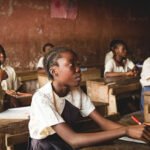
The project aims to help improve access to quality secondary education in a safe and healthy school environment for 5,000 girls as well as train 2,200 teachers and administrative officials.
It is also expected to provide literacy programmes to more than 7,500 women in Chad’s Hadjer Lamis, Ouaddaï and N’Djaména regions.
Source: AfDB
Photo source: AfDB

