



Imagine that a Nigerian citizen dares to complain about a pothole that swallowed his tire on the road to work, only to be told, ‘Ignore the busybodies and bystanders’.
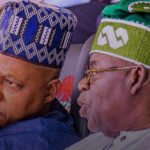
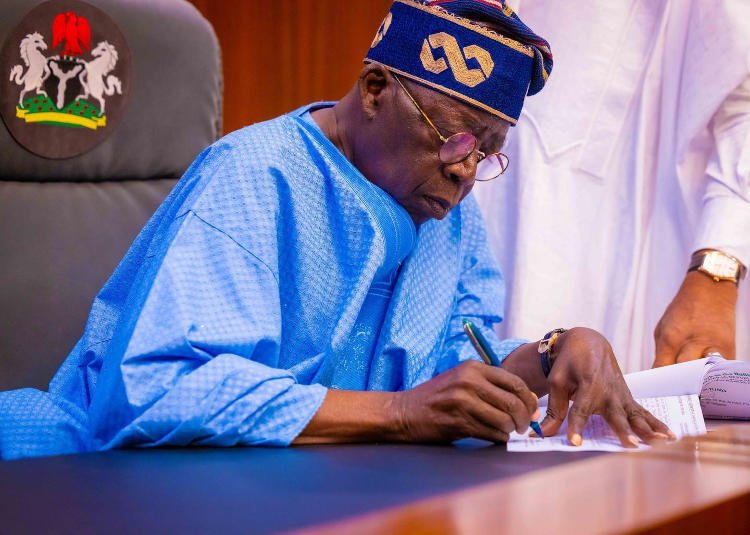
During the recent reopening of the revamped International Conference Centre (ICC) in Abuja, President Bola Tinubu praised the FCT Minister, Nyesom Wike, for his ‘transformational’ leadership and encouraged him to stay focused on delivery, even in the face of criticism.
‘Don’t pay attention to the busybodies and bystanders. Whatever they say, continue to do your good work’, the president said.
Now, there is absolutely nothing wrong with a president commending his minister for a job well done.
But in a country battling high inflation and worsening poverty, public criticism is not a nuisance; it is a necessity.
Some might argue the president was simply boosting morale. However, words from the highest office in the land carry weight.
And this was not just a light-hearted joke. It was a loud dismissal of public feedback and, by extension, of the constitutional rights of Nigerians.
Section 39(1) of Nigeria’s constitution recognises the right of every Nigerian to hold an opinion and to receive and impart ideas and information without interference.
When the president publicly advises ministers to ignore criticism, he is brushing off democracy’s core tenet that leaders must be accountable to the people.
It implies that citizen participation is an obstacle to progress, rather than a pillar of democratic governance. But if Nigeria’s democracy is reduced to a spectator sport, where only ministers play and citizens watch, then what exactly are we celebrating on Democracy Day in the country?
To refer to citizens as ‘busybodies’ is to suggest that we have no right to question our leaders. It paints feedback as sabotage and dissent as disturbance.
The statement also adds fuel to a growing fire of distrust between government and citizens, with protests met with tear gas and public commentary dismissed as social media noise.
Let it be said that the citizen questioning a failed project is not a busybody. The journalist exposing procurement irregularities is not a bystander. They are citizens. And they are doing their job.
As President Tinubu prepares to address Nigerians on 12 June, we call on him to publicly clarify his statement and affirm that citizen participation is the life force of a functioning democracy. He also needs to reassure Nigerians that their voices matter, not just their votes.
We also call on every ministry to operate a transparent citizen feedback and complaint mechanism, accessible online and offline. Performance should be measured by delivery and responsiveness.