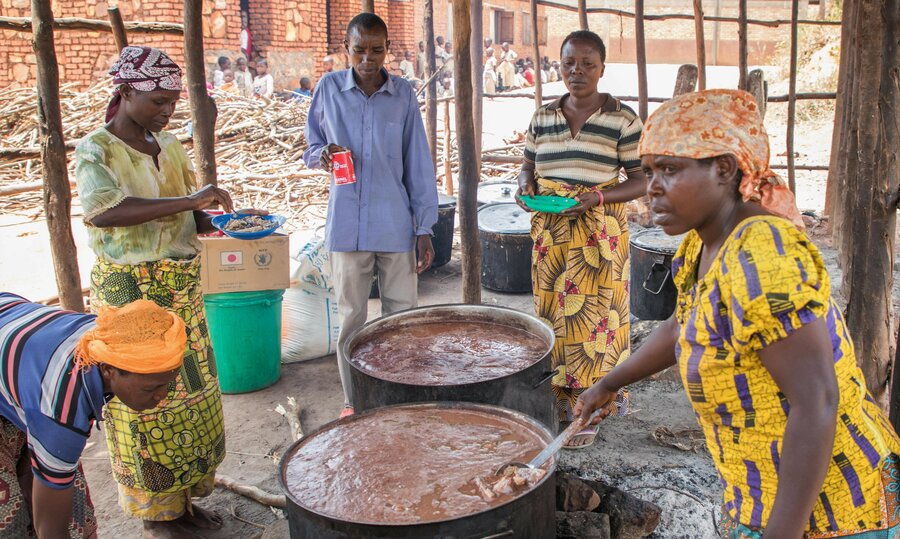






The United Nations World Food Programme (WFP) says a contribution of mackerel from Japan has buoyed the diets of over 200,000 schoolchildren in Burundi.
WFP is implementing a homegrown school feeding programme that supplies 500,000 children in more than 700 schools with daily school meals which include rice, maize flour, beans, and leafy greens.
The feeding programme aims to create resilience in communities to become totally self-reliant in growing crops that will facilitate a diverse diet for schoolchildren.
‘High in protein, vitamins, and minerals, the mackerel is a welcome dietary addition for 270,000 children living in the food-insecure regions of Bujumbura, Kirundo and Muyinga’, WFP stated.
Malnutrition rates for children below the age of five in Kirundo and Muyinga provinces are at 57 percent and 62 percent respectively.
‘I want to work in finance and ensure that my family has a good life’, WFP quoted 14-year-old Niyibizi, a student at a primary school in Muyinga province, as saying.
Niyibizi’s parents, according to WFP, are smallholder farmers who live five kilometres away from his school.
It is understood that one meal per day is the norm in Niyibizi’s family and a daily hot lunch is a motivating factor for him to make the long journey to and from school by foot.
‘I like the food we eat at school and especially fish with beans’, he said. ‘If we ate fish every day I would never miss school even if I were sick’.
The head of the school feeding programme at the WFP, Carmen Burbano, admitted in 2020 that the programme was facing the biggest hunger and education crisis in history.
The State of School Feeding Worldwide 2020 report found that a total of 39 billion meals were missed due to Covid-19.
Meals not only supply children with the critical nutrition they need to learn better, they also serve as an incentive for parents in some of the world’s poorest countries to send their children to school.
‘Mackerel contains proteins which are important for physical and intellectual growth in children’, a WFP Nutritionist, Niamkeezoua Kodjo, said.
‘It is also rich in omega-3 fatty acids which are essential for brain development and vitamins and minerals which ensure bone growth’.
Japan’s ambassador to Burundi, Takayuki Miyashita, said, ‘The school meals programme is an invaluable investment for the next generation in Burundi.
‘Food security is one of the main pillars that the Japanese government focuses on and we are happy to support WFP in achieving this’.
Last year, the government of Burundi contributed U.S.$2.5 million to the school meals programme. It has identified school meals as the largest and most important safety net for vulnerable people in the country.
Source: WFP
Photo source: WFP/Irenee Nduwayezu