






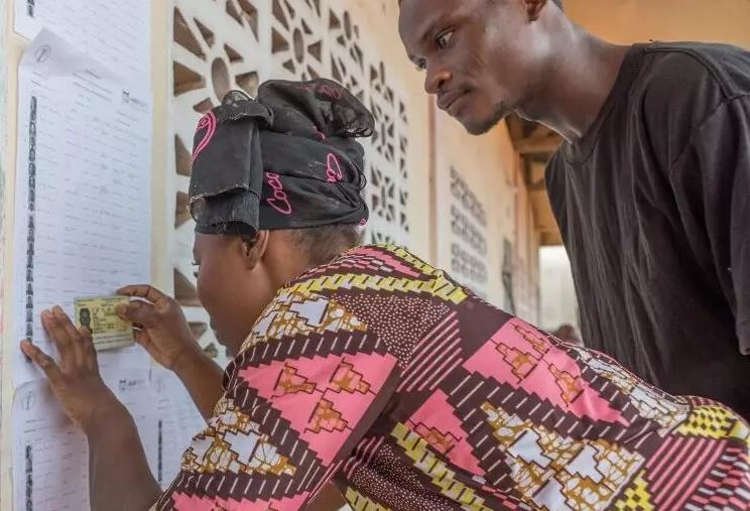
Benin’s January 2026 legislative elections ended with rare efficiency, as all 109 seats in the National Assembly fell neatly into the hands of parties aligned with President Patrice Talon.
Development Diaries reports that the Progressive Union for Renewal and the Republican Bloc will hold the entire chamber. But while the outcome of the polls is a crushing win for the government, a one-party parliament is a structural democratic risk.
Without any opposition MPs, there is no check on executive power, as budgets and laws will sail through unchecked.
And voters who preferred alternative voices – be they opposition activists, civil society advocates, or ordinary Beninese – are left without representation. In practice, this means the Assembly cannot fulfill its oversight role or give voice to minority concerns.
How did this happen?
A key factor was a heavily skewed electoral code. In late 2025, Benin passed a new law requiring a party to win 20 percent of the national vote and 20 percent in each of 24 regions to claim seats.
This threshold proved deliberately exclusionary, with the main opposition, the Democrats, taking about 16 percent of votes nationally but failing to meet the regional cut-off and winning zero seats.
Their own spokesperson denounced the system as ‘exclusionary… heavily favour[ing] parties aligned with the president’.
In other words, the rules were engineered to shut out challengers – a fact even local observers noted with alarm. With only pro-government parties allowed in parliament, democratic pluralism has effectively collapsed overnight.
This outcome is the culmination of a broader system failure in Benin’s politics. Once hailed as a post-communist ‘poster child for African democracy’, Benin has slid towards authoritarianism in recent years.
Analysts note that President Talon has ‘systematically squeezed the substance out of the democratic… forms, leaving only a shell’ of constitutional government.
Opposition figures have been banned from ballots, media outlets muzzled, and security forces used to intimidate critics. In this context, an all-aligned parliament was never far off.
Responsibility for this state of affairs lies with the electoral commission and the ruling party for pushing through the partisan reform. It also implicates the legislature itself for approving a constitution and laws that allowed such changes.
International observers have warned for years that Benin’s legal framework was being hollowed out to guarantee one-party control. And with this parliament, there is now practically no counterweight to executive overreach.
In effect, Benin’s democracy has a fundamental problem of the absence of political pluralism. When no alternative parties can win seats, citizens lose any voice of dissent.
Minority groups and independent civil society organisations – whether representing labour, youth, or ethnic communities – find no champion in government.
This vacuum fosters disillusionment, as voters who see all choices leading to the same outcome may disengage entirely or resort to extra-parliamentary protest.
In the worst case, institutional gridlock can give way to instability or informal power grabs.
The people of Benin can take action even now. You should bolster independent election monitoring to document any irregularities or restrictions during voting and seat allocation.
Push through electoral reforms at the national assembly or via referenda to lower absurd thresholds and ensure all parties get fair representation.
Civil society groups should campaign for legal protections of political pluralism, for example, constitutional clauses guaranteeing the right to organise opposition parties.
Above all, Beninese voters and activists must remind both their government and international partners that a parliament without opposition is a source of systemic risk, not national unity.
Photo source: AFP/Yanick Folly

