





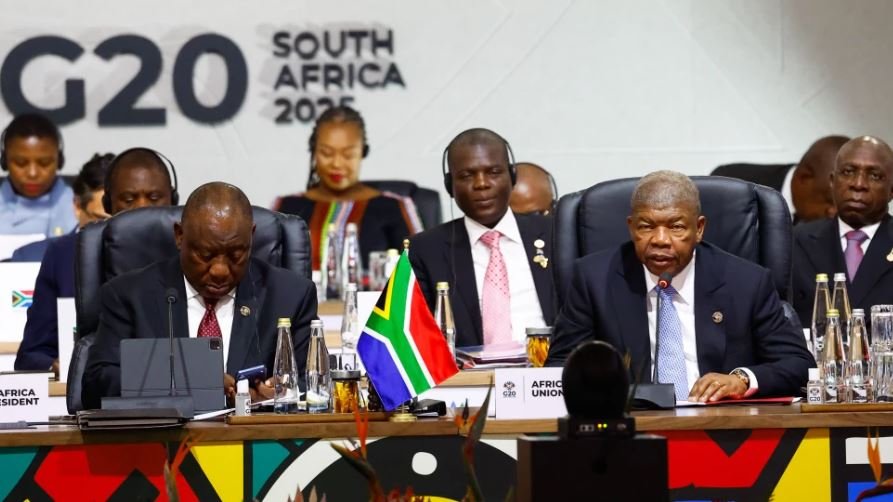
Africa’s largest political gathering, the African Union (AU) summit, has opened once again without the continent’s youngest majority at the centre, even as their frustration grows louder, sharper, and impossible to ignore.
Development Diaries reports that the AU opened its annual summit on Saturday in Ethiopia to discuss the future of the continent, even as the continental body, which was established to ‘promote the unity and solidarity of the African States’, faces a legitimacy crisis among youth for failing to meet their expectations.
While the AU deliberates over water, sanitation, climate change, instability, and geopolitical shifts, millions of young Africans are online talking about ‘A bloc of old leaders discussing a young continent: What could possibly go wrong?’
And frankly, what the story says is that the gap between the AU’s founding ideals and citizens’ lived realities is widening at a rate faster than the Sahel’s desertification.
The failing system here is continental governance that has stubbornly refused to evolve with its people. It is failing because the AU continues to prioritise heads of state over heads of households, the political elite over the politically restless, and the photo ops over the fundamentals.
When the AU ‘commended’ Uganda’s 2021 elections while citizens were being intimidated, the internet shut down, and civic actors harassed, the signal was that power speaks louder than rights.
So who is responsible?
Let’s name names. The duty bearers include the African Union Commission, chaired by Mahamoud Ali Youssouf; the Assembly of Heads of State and Government; and member state leaders, particularly those who refuse to pay dues, undermine AU resolutions, manipulate elections, clamp down on civil liberties, and treat citizen voices like background noise. These are the stewards of a system that keeps young people politically homeless in their own region.
From a rights-based frame, youth anger is a legitimate demand for participation, accountability, equitable development, and dignity as captured in the African Charter on Democracy, Elections and Governance.
Yet lived experiences show a reality where opposition candidates are sidelined, flawed elections are blessed, and enforcement mechanisms are as weak as overstretched NGOs trying to do government work.
This is not merely a story about disgruntled youth; it is a story about a generation that recognises the AU’s legitimacy crisis and will no longer outsource its political future to leaders with expiration dates older than most African cities’ streetlights.
Citizens across the continent are calling for AU institutions to stop acting like helpless bystanders; they want transparent election observation that actually has consequences.
They want sanctions that actually mean something, as the AU cannot condemn coups on Monday and endorse flawed elections on Tuesday.
So, as citizens, we must demand a people-driven AU by holding national governments accountable for their roles in weakening continental structures. Engage lawmakers, foreign ministries and AU social platforms with demands for reforms that centre citizens; and during elections, push political candidates to commit to AU reforms.
As for institutions, the AU must strengthen enforcement mechanisms, protect election observers from political interference, issue rapid and honest statements during democratic violations, and create formal youth oversight platforms with real influence.
With respect to member states, they must pay their dues, respect democratic norms, protect civic space, and engage the young population as co-drivers of Africa’s development, not patients in a political waiting room.
The people most affected by the AU’s shortcomings are young people, women, low-income citizens, people living with disabilities, and rural communities. These are the ones least represented in its decision-making. Any meaningful reform must start with making space for those voices.
Photo source: Thamas Mukoya/AP