


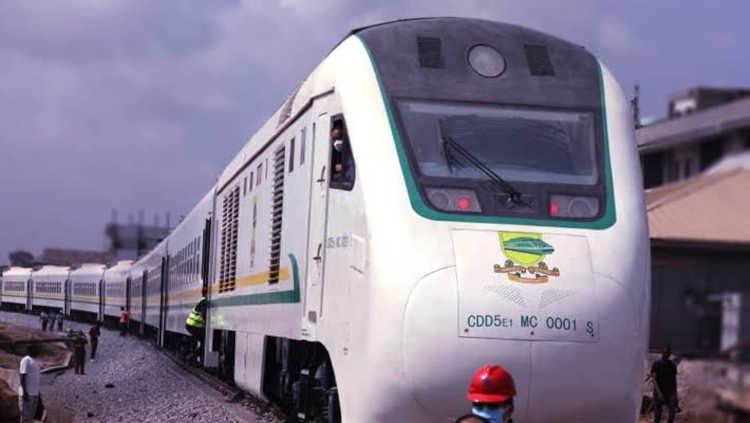
The Abuja–Kaduna train was supposed to guarantee safer travel, but repeated incidents are turning what should be a routine commute into a worrying gamble.
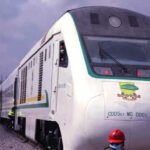
Development Diaries reports that a passenger train travelling from Kaduna to Abuja jolted violently on Monday after an apparent collision on the busy rail corridor, injuring passengers and throwing many off their seats in panic.
Witnesses described hearing a loud bang before the train lurched to an abrupt halt, leaving passengers bleeding from cuts and bruises and scrambling to understand what had just happened.
The incident once again raises questions about safety on the Abuja–Kaduna line, one of Nigeria’s most important rail routes.
For readers who feel a sense of déjà vu, it is because they are not imagining things. The Abuja–Kaduna corridor has become familiar territory for railway incidents.
In August 2025, another train on the same route derailed near the Kubwa–Asham section with more than 600 people on board, leaving over 20 passengers injured and prompting an investigation by the Nigerian Safety Investigation Bureau.
Investigators later pointed to poor maintenance and damaged track components that had previously been patched rather than properly repaired.
The broader picture is even more worrying, with data cited by transport authorities showing that Nigeria recorded about 188 train track incidents between 2020 and 2025.
For a transport system that is supposed to inspire public confidence, that statistic reads less like a safety record and more like a warning label.
This is particularly troubling because the Abuja–Kaduna rail line was designed to solve a serious national problem. When it was inaugurated in 2016, it offered travellers a safer alternative to the dangerous highway linking the two cities.
After the deadly Abuja–Kaduna train attack in March 2022 that left several passengers dead and many abducted, the rail service became even more critical for Nigerians seeking a safer way to travel.
But safety is not achieved simply by laying tracks and buying coaches; it requires consistent maintenance, reliable equipment, trained personnel, and transparent communication with passengers when things go wrong.
When trains are repeatedly involved in incidents like this, citizens are forced to ask whether the system responsible for keeping them safe is actually doing its job.
That system has clear duty bearers. One is the Nigerian Railway Corporation, which operates the trains and is responsible for maintaining the infrastructure and ensuring operational safety.
Second is the Federal Ministry of Transportation, which sets policy and oversees the rail sector, while the Nigerian Safety Investigation Bureau investigates accidents and recommends reforms to prevent future incidents.
Together, these institutions form the chain of responsibility that should guarantee that passengers board a train without worrying about whether the track ahead is properly maintained.
Yet the recurring nature of these incidents suggests that lessons are not always translating into lasting reforms, as investigators’ reports have flagged defective equipment, damaged track components, and gaps in staff training as urgent issues.
When the same problems keep appearing in investigation reports, it raises the uncomfortable possibility that recommendations are being filed away rather than implemented.
This is where the story moves beyond a transport incident and becomes a governance issue because when public transport systems fail repeatedly, it signals a breakdown in accountability somewhere along the line.
And Nigerians should not simply shrug and move on after each incident. Citizens should demand transparent investigation reports after every incident and insist that the findings are made public.
They should demand clear timelines for repairing defective tracks and upgrading safety systems along the Abuja–Kaduna corridor. They should demand regular public updates from the railway authorities rather than the familiar silence that often follows these incidents.
They should also demand that lawmakers exercise oversight over rail safety, because a train system funded with public resources must answer to the public.
The Abuja–Kaduna train was once sold as a symbol of modern transport in Nigeria. But today, every derailment or any other incident erodes that promise.
With proper maintenance, transparent oversight, and genuine accountability from the institutions responsible for rail safety, the train can still become what Nigerians were promised in the first place.
Photo source: Nigeria Railway Corporation