



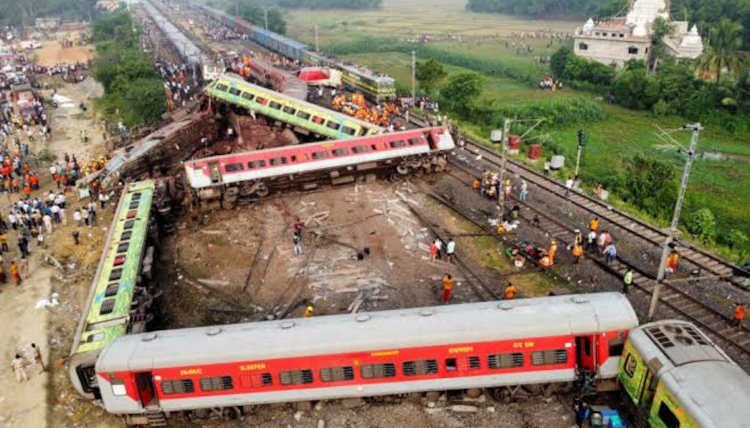
The latest Abuja–Kaduna derailment, bringing the tally to 188 train derailments in just six years, exposes the troubling gap between Nigeria’s multibillion-dollar rail investments and the government’s failure to ensure their safety and sustainability.
Development Diaries reports that at least 14 passengers were injured when a Kaduna-bound train departing the Kubwa station in Abuja derailed on Tuesday, just minutes into its journey.
According to media reports, the Nigerian Railway Corporation (NRC) has since announced the suspension of operations on the route until further notice.
There have been similar incidents in the past, between 2019 and 2025 which brings the number of such incidents to 188, according to data from the National Bureau of Statistics (NBS).
Since 2016, more than $7.3 billion, largely financed through loans from the China Exim Bank, has been sunk into standard-gauge projects like the $2.6 billion Lagos–Ibadan line and the $874 million Abuja–Kaduna line, yet public confidence has been eroded by recurring accidents, vandalism, and maintenance neglect.
According to the NBS, derailments rose steadily between 2020 and 2022, with 57, 61, and 65 incidents respectively, underscoring a systemic crisis rather than isolated mishaps.
Each derailment makes Nigeria’s rail modernisation appear like an expensive illusion.
Meanwhile, what heightens public frustration is the money already committed to ‘securing’ rail infrastructure.
In August 2022, the Federal Executive Council (FEC) approved over N718 million in contracts to secure just the Abuja–Kaduna corridor, with Al-Ahali Security Guards Limited and Seaguard Security and Protective Company Limited receiving N407 million and N310 million respectively to secure 27.4 kilometres of track and eight stations over two years and to protect 18 kilometres and four stations over the same period.
Unfortunately, vandalism on the line has continued unabated three years later.
Despite these hefty allocations, NRC admitted that more than 150,000 rail clips were stolen nationwide between 2022 and 2023, over 50,000 each from the Lagos–Ibadan, Warri–Itakpe, and Abuja–Kaduna lines.
If security contracts worth hundreds of millions cannot prevent widespread vandalism, Nigerians deserve answers: Where did the money go, and what mechanisms of accountability exist for firms that were paid to deliver but clearly failed?
Going forward, the federal government must move beyond recycling contracts to security outfits that deliver little. Transparency demands that the National Assembly, especially its committees on transport and public accounts, scrutinise every kobo spent on rail security and maintenance.
Technology-driven solutions such as drones, CCTV, and real-time patrols must replace the current reactive model.
The Minister of Transportation, Sa’idu Alkali, needs to explain why safety lapses continue unchecked.
Also, the NRC Managing Director, Kayode Opeifa, should show transparency on how his corporation is spending billions yet cannot keep tracks patrolled or even maintain a functional maintenance vehicle.
Development Diaries calls on the Minister of Transportation, Sa’idu Alkali, and NRC MD, Kayode Opeifa, to issue a full public audit of security and maintenance spending.
Photo source: The Fact Daily