

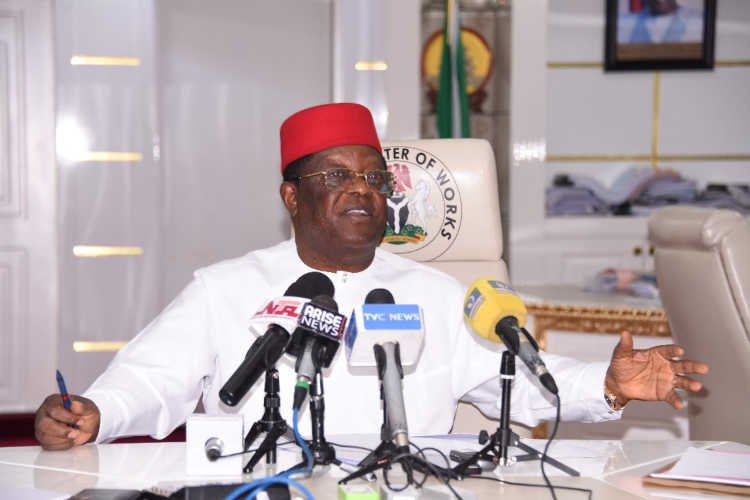
The unfolding case involving Minister Dave Umahi, a businesswoman, and the police has again confirmed that power in Nigeria often runs like a stubborn generator that is noisy, overpowering, and quick to blow smoke in the face of anyone who dares to question it.
Development Diaries reports that activist and former presidential candidate Omoyele Sowore has accused the Nigeria Police Force and the minister of abusing state power in the controversial arrest and detention of the businesswoman, Tracy Ohiri, who had alleged that Umahi owed her N250 million and once made sexual advances toward her.
What should ordinarily have been a civil dispute, if proven at all, has now spiralled into a criminal circus, with the police allegedly acting more like the minister’s private enforcement unit than an institution funded by taxpayers.
At the heart of this story is a familiar Nigerian problem of a policing system that bends easily towards the powerful and stiffens instantly against ordinary citizens.
The key issue here is not whether Ohiri is right or wrong, nor whether Umahi is guilty or innocent, because he is entitled to due process like anyone else.
The real issue is why the police appear eager to escalate a financial and personal dispute into a criminal case, fly a citizen across states, and deny bail, all while creating the perception of bias.
If the allegations of intimidation inside the Federal Capital Territory (FCT) command are true, then the system is actively betraying those it is meant to protect.
This failure is rooted in weak accountability mechanisms, excessive discretionary powers, political interference, and a longstanding culture where the police behave as though their oath of office includes ‘protect the powerful first, clarify later’.
Duty-bearers in this matter include the Nigeria Police Force under acting IGP Tunji Disu, the Ministry of Police Affairs, the Police Service Commission, and the Ministry of Works. Their silence, or delay, only deepens public suspicion.
And here lies an important opportunity for IGP Disu. After promising zero tolerance for police corruption and impunity, this case is the perfect test of whether citizens should take his declarations seriously.
Ordering an independent, transparent, and impartial investigation would send a powerful signal to everyday people, especially women like Ohiri, who often fear reprisals when standing up to influential figures, that the police can be trusted.
This is another rights issue, with Nigeria obligated under its constitution and under the African Charter on Human and Peoples’ Rights to ensure that all citizens, regardless of gender, class, or social influence, enjoy equal protection before the law.
Arbitrary arrest, detention without clear justification, and the use of police facilities for intimidation are violations of fundamental human rights, including the rights to liberty, dignity, and fair hearing.
Also, women and girls face even steeper risks in cases involving alleged sexual advances, as societal stigma and power dynamics often silence their voices, while young people who speak out online are increasingly criminalised under vague cybercrime allegations.
The Nigerian masses must remain vigilant by demanding transparency, documenting and reporting abuses, supporting victims publicly, and insisting on lawful policing.
As noted earlier, the IGP must order a credible investigation and release a public update. On their part, the Police Service Commission must ensure there is no political interference, while the Ministry of Police Affairs must strengthen oversight, and the judiciary must resist any pressure that undermines due process.
Nigeria cannot continue with a policing system where powerful figures can summon state institutions like dispatch riders. Citizens deserve a system where justice is determined by truth and due process, not influence.
